
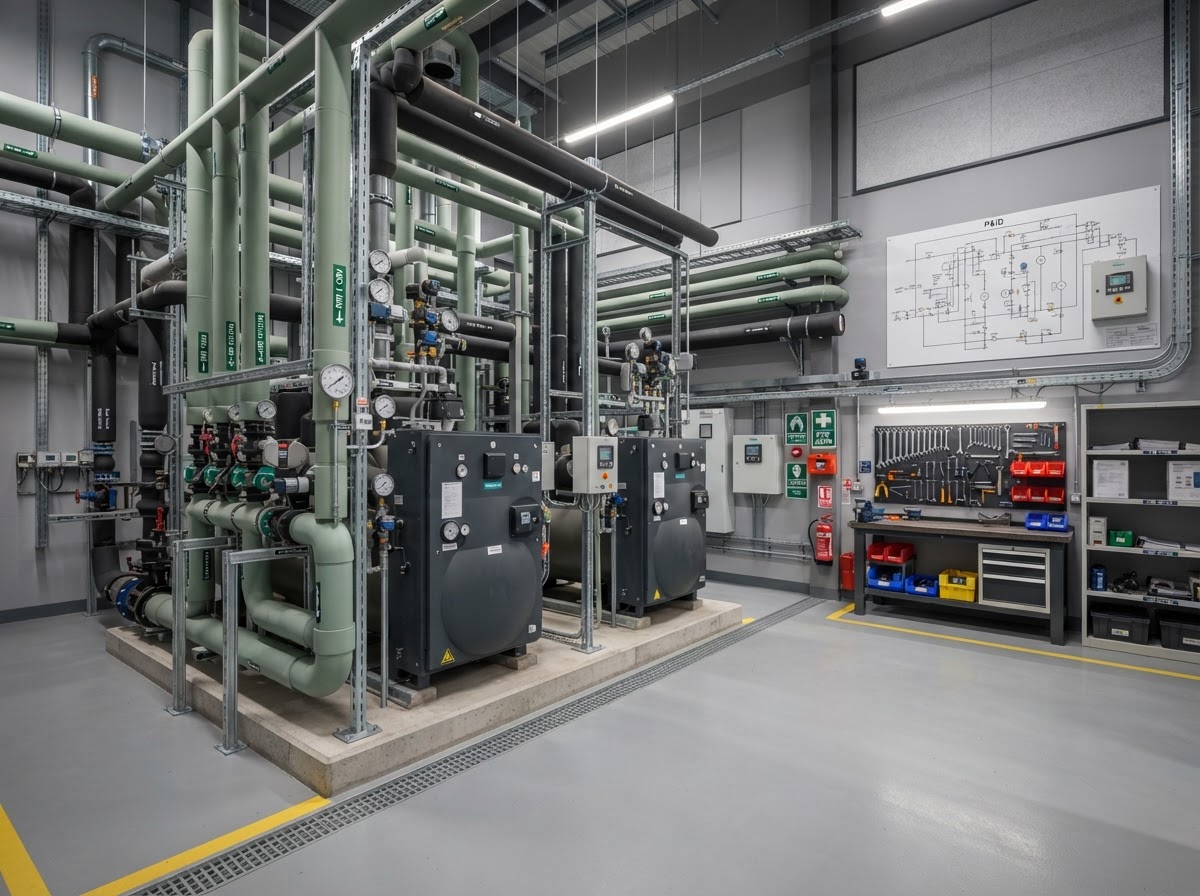
Planned Preventative Maintenance That Helps Prevent Disruption
Structured maintenance planning for commercial premises, pharmaceutical facilities, offices and retail spaces—helping identify issues earlier, reduce unexpected breakdowns and support operational continuity.
Unexpected maintenance problems can interrupt operations, place pressure on internal teams and lead to work being addressed at the least convenient time.
Planned preventative maintenance, commonly known as PPM, creates a more structured approach. Maintenance requirements are identified and scheduled across the year, helping clients address issues before they develop into more disruptive problems.
Operio FM works with clients to plan and coordinate maintenance around the needs of their premises and day-to-day operations.
Move From Reactive Maintenance to a Planned Approach
What Is Planned Preventative Maintenance?
Planned preventative maintenance is the scheduling of maintenance work at appropriate intervals instead of waiting for equipment, systems or elements of a building to fail.
The purpose is not to claim that every fault can be prevented. It is to create a more organised approach that helps identify developing issues, reduce avoidable surprises and support the continued operation of the premises.
Two Different Approaches to Maintenance
Reactive Maintenance
- Work begins after a fault or failure occurs
- Requirements can arise without warning
- Repairs may interrupt normal operations
- Internal teams must respond under pressure
- Maintenance can become difficult to forecast
Planned Preventative Maintenance
- Work is scheduled in advance
- Maintenance requirements are organised across the year
- Potential issues can be identified earlier
- Work can be coordinated around operations
- Clients have clearer oversight of upcoming requirements
The Benefits of Planning Ahead
Fewer Unexpected Disruptions
Scheduled maintenance helps reduce the risk of avoidable failures interrupting normal operations.
Earlier Issue Identification
Potential problems may be easier to manage when they are identified before developing further.
Better Maintenance Visibility
A structured programme gives clients clearer oversight of planned requirements across their premises.
Support for Operational Continuity
Maintenance can be coordinated around the people and activities taking place within the building.
- Understanding the property and its operational requirements
- Identifying relevant maintenance needs
- Developing an appropriate maintenance schedule
- Coordinating planned visits and activities
- Recording identified maintenance requirements
- Communicating upcoming work with the client
- Reviewing the programme as requirements change
- Connecting planned maintenance with necessary project works
A Maintenance Programme Built Around Your Premises
This is a flexible framework rather than a fixed checklist. The exact programme depends on the property, its operational demands and the client's requirements. Not every item is included within every client agreement.
A Structured Maintenance Process
Understand
We begin by understanding the property, its operational demands and the client's existing maintenance arrangements.
Plan
Maintenance requirements are organised into a structured programme based on the needs of the premises.
Coordinate
Planned work is coordinated around the building's operations and communicated to the relevant teams.
Review
Requirements and identified issues are reviewed so the maintenance approach can develop with the property.
Planned Maintenance Across Different Environments
Commercial Premises
Structured maintenance that helps commercial properties remain functional and operational.
Explore sectorPharmaceutical Facilities
Carefully coordinated maintenance for environments where quality and continuity are important.
Explore sectorOffices & Workplaces
Planned support that helps workplaces remain comfortable, functional and ready for use.
Explore sectorRetail Spaces
Maintenance planning that considers trading activity and the condition of customer-facing environments.
Explore sectorExplore the other service pillars.
Ready to Take a More Planned Approach?
Tell us about your premises and current maintenance requirements. Operio FM will discuss how a structured maintenance programme could support your operations.